
I had a batch of sauerkraut that didn’t turn out as I wanted. A really big bloom of kahm yeast had formed on the top, and because I had neglected it, it had gone further than I wanted and had compromised the flavour, so the chickens got a prezzie. It also wasn’t salty enough which might explain the overgrowth of kahm. Bummer.
Anyway, I set another batch off today with some added spices for a bit of variety. The health benefits of home made kraut are far superior to the shop bought stuff which is invariably pasteurised and therefore all the good bacteria have been eliminated. The bacillus proliferating in the fermentation process gives the kraut its tangy taste and aids in digestion just like natural yoghurt does. It also improves the nutritional value.
The book Nourishing Traditions by Sally Fallon gives a great description of the good things these old fashioned methods of preserving give us. It’s a pity that we have let the processed food industry and the paranoid regulators diminish our knowledge of the benefits of these great foods by flooding us with so called easy and safer alternatives.
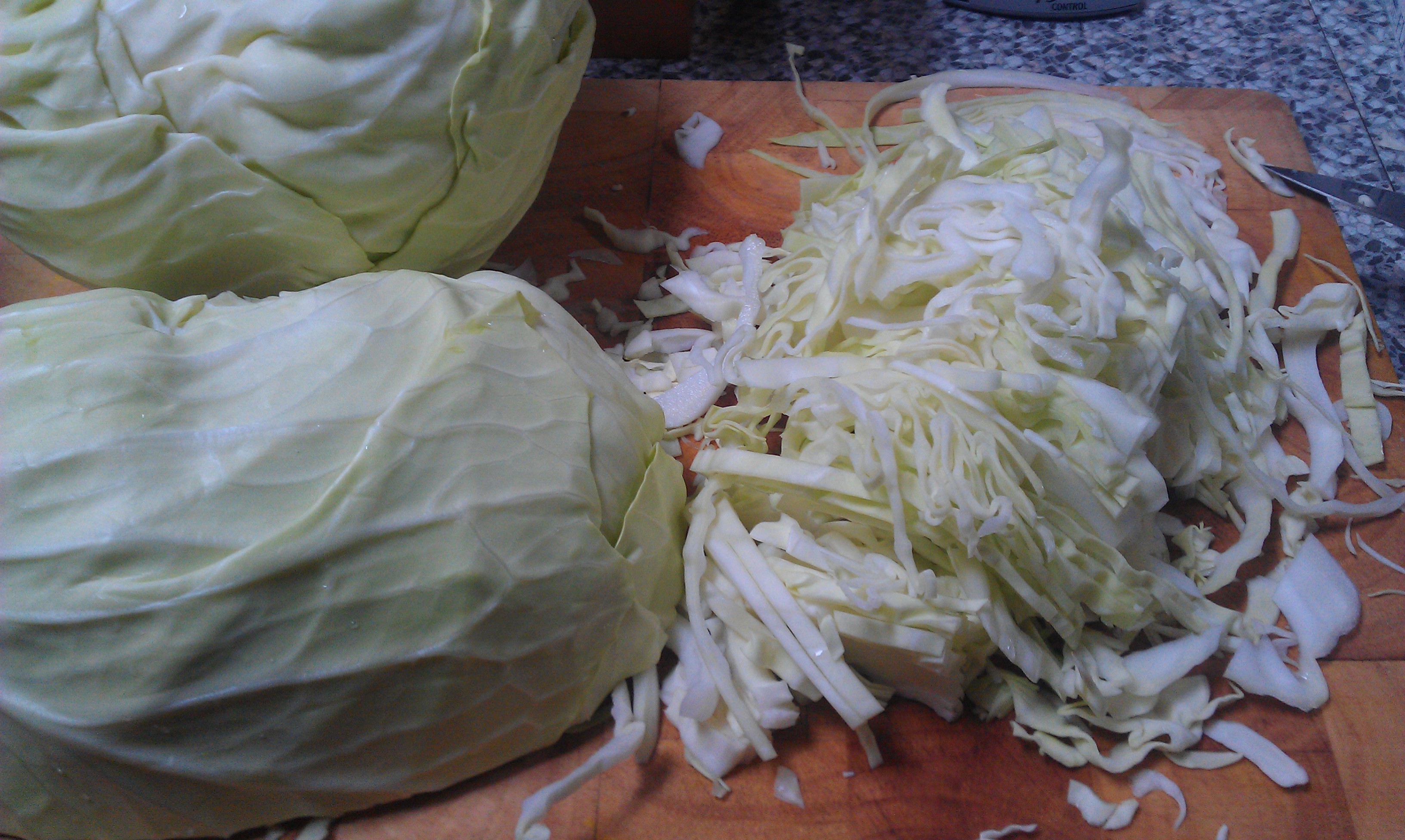
Finely shred the cabbage
Recipe:
2 medium cabbages shredded finely
10 cloves
1 bay leaf
15 black peppercorns
2 teaspoons of cumin seeds
2 tablespoons of salt
4 tablespoons of whey
Cooled boiled water
Firstly, make sure every utensil you use is scrupulously clean, as is your preparation area. Wash your hands properly too, and if you have long hair, tie it up! You can sterilise all your gear if you like, but just make sure there is no residue left, or the batch will just go bad because you have restricted the good bugs from multiplying.
The acidity of the lactic acid fermentation process is in part what protects the cabbage from being consumed by “bad bugs”. Also, if you can buy organic, do so, there is less crap and it does actually taste better.
Shred the cabbage finely with a knife or a mandolin, watch your fingers! Layer the cabbage in the crock, ( I have a Harsch fermentation crock which is excellent ) and add some of the rest of the dry ingredients as you go, tamping down with your fist or a potato masher or similar implement.
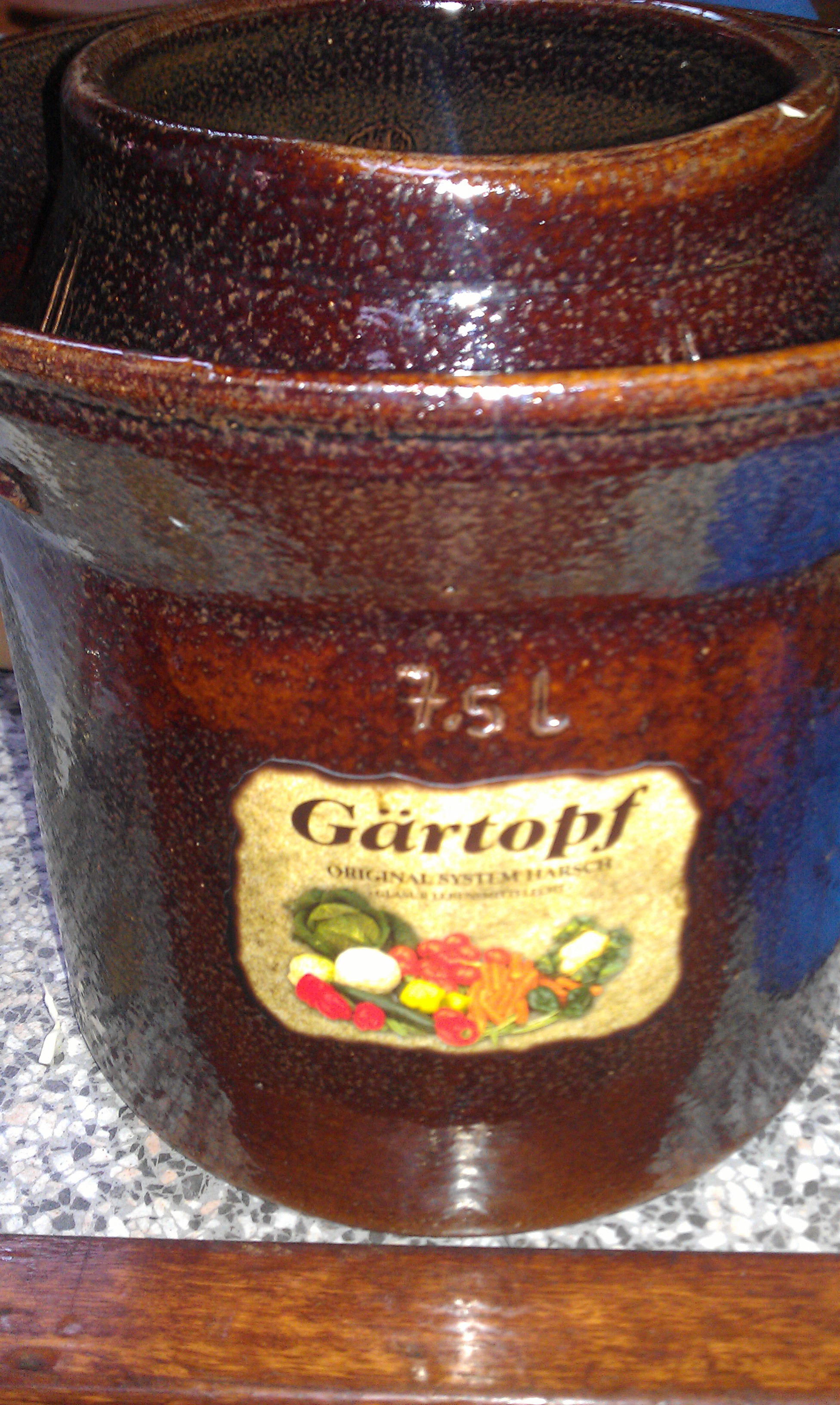
The fermentation crock
Repeat until the crock is 80% full. Pop a couple of whole cabbage leaves on the top of the tamped down cabbage and then rest the stones on top. Add your whey and some cooled boiled water until the stones are just covered. ( You don’t actually have to use whey but it speeds things up.)
Pop the crock lid on and fill the moat with water and place in a warm spot ( 20-22’c room temperature) for a few days. You will hear the satisfying sound of “plip, plip” as the kraut starts to ferment. Don’t be tempted to peek just yet.
After a few days warm fermentation, transfer the crock to a cooler environment of about 15’c for 2-3 weeks. After this, the crock needs to go in a cold environment of 0′-10’c. At this point it can be opened and enjoyed at 4 weeks old, but it gets better as it matures over time.
You can transfer the kraut to smaller jars and put them in the fridge now if you want to make the volume more manageable or to make another batch. Just make sure there is enough liquid covering the top of the kraut (add a little cooled boiled slightly salted water if you need to.)
Sometimes a kahm yeast forms on the top. It’s white and sort of fluffy and can be skimmed off the surface. It’s harmless, but doesn’t add to the flavour. Remove any solid matter that has it and looks a little oxidised.
Don’t be put off, home-made sauerkraut is brilliant, and I can personally confirm its healing properties on the human gut after several bouts of gastro acquired in South East Asia and China.
It’s also delish!
Enjoy!
kind regards,
J
As a footnote:- Use your common sense, if the kraut smells and tastes ok it probably is, if there is black or red mould, and it smells really, really bad, then don’t use it. Trust me, you will know.
 The Art of Eating Well